Fall Glass Cleaning: 6-10 CNY/sqm — How to Calculate Expanded Area, Price Differences, and Key Pitfalls to Avoid
Autumn Glass Cleaning: The 6-10 CNY/sqm price difference depends on contamination levels, floor accessibility, and glass type. This article clarifies the calculation method for gross area, outlines the three-stage pricing process, and lists five critical quote traps to verify before signing, plus acceptance safeguards.
Appointments for home window cleaning peak from 9 to 11. Summer dust, rain streaks, and sand trapped in window frames accumulate over the season. With lower sun angles in autumn, these imperfections become more visible as sunlight enters at an angle, magnifying every water mark and film-like residue. Additionally, autumn's moderate temperatures and low humidity allow cleaning solutions to dry at a controlled rate, making it an ideal time for deep window cleaning.
In over 70% of our glass cleaning inquiries during this period, customers ask the same question: What's the difference in the 6-10 yuan/sqm price range? This article breaks down pricing logic, area calculation methods, and common quoting traps to help consumers build a clear decision-making framework before booking.
Why do autumn demands surge all at once?
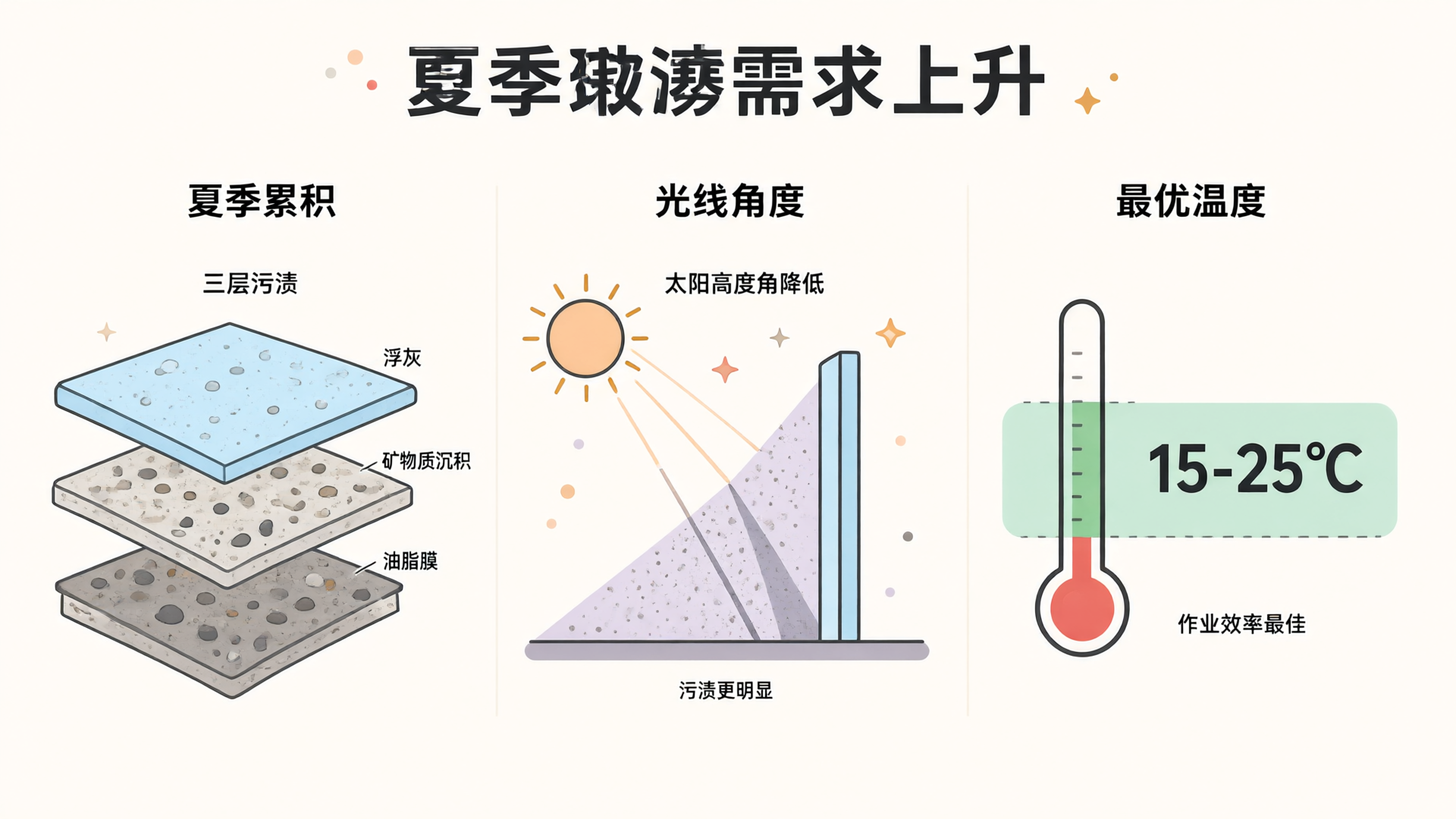
Glass cleaning needs aren't evenly distributed throughout the year. In summer, frequent window opening allows outdoor dust, pollen, and vehicle exhaust particles to settle on the inner glass surface through screens. After rain evaporates, mineral deposits form white water stains on the outer surface. Over three months, this buildup significantly reduces glass light transmission by autumn.
Another driving factor is the angle of light. After the autumnal equinox, the sun's altitude decreases, and sunlight strikes the glass at a more oblique angle. Stains that were barely noticeable when viewed head-on cast shadows under this side lighting, amplifying the visual perception of dirt many times over. Many consumers only realize "it's time to clean the glass" at this point, even though the grime has been there all summer.
From a service supply perspective, autumn temperatures between 15°C and 25°C prevent cleaners from evaporating too quickly due to heat (leaving residue) or freezing/drying too slowly due to cold. This range offers ideal conditions for glass cleaning, delivering top-tier results and efficiency throughout the year.
How is the "expanded area" calculated?
Glass cleaning services typically use two pricing models: per sash and by total glass area. The per-sash approach seems straightforward, but window sizes vary widely—a small bathroom vent might be 5 to 8 times smaller than a living room floor-to-ceiling window. Using a single price per sash would inevitably disadvantage one party. The area-based model measures each pane individually, sums the areas to get an accurate total, and then multiplies by the unit price to determine the final cost.
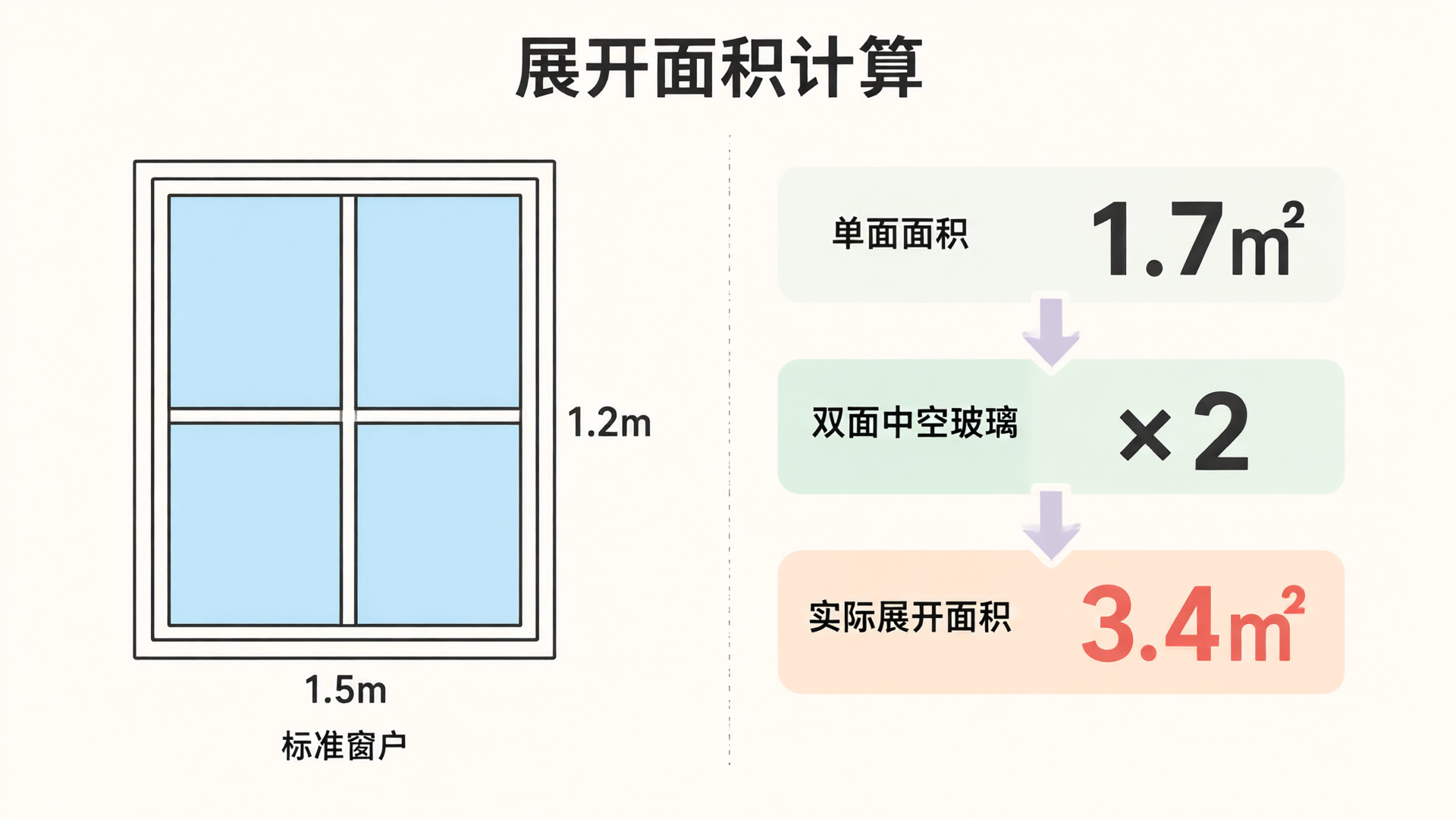
The calculation for expandable area is based solely on the visible glass surface, excluding the window frame, sill, and wall. For a standard 1.5m × 1.2m casement window, the expandable area of a single glass pane is approximately 1.6-1.7㎡ (after deducting the frame overlap). If the window features double-paned insulated glass, both inner and outer surfaces require cleaning, so the expandable area is calculated at 2 times the base area, totaling 3.2-3.4㎡.
The key to this algorithm is "actual measurement." The standard process requires cleaning staff to measure and record each window upon arrival, generating an area list for consumer confirmation before work begins. In our settlement records from 2024–2025, projects using the three-tier pricing method (actual area → pollution level → written quote) achieved a consistency rate of 98.6% between final settlements and written quotes. Variations stem primarily from reasonable on-site measurement deviations within 2%.
What determines the price difference of 6-10 yuan/sq.m?
For homes in the same complex and building, glass cleaning prices can range from 6 to 10 per unit. This price variation is not arbitrary; it's determined by several quantifiable factors.
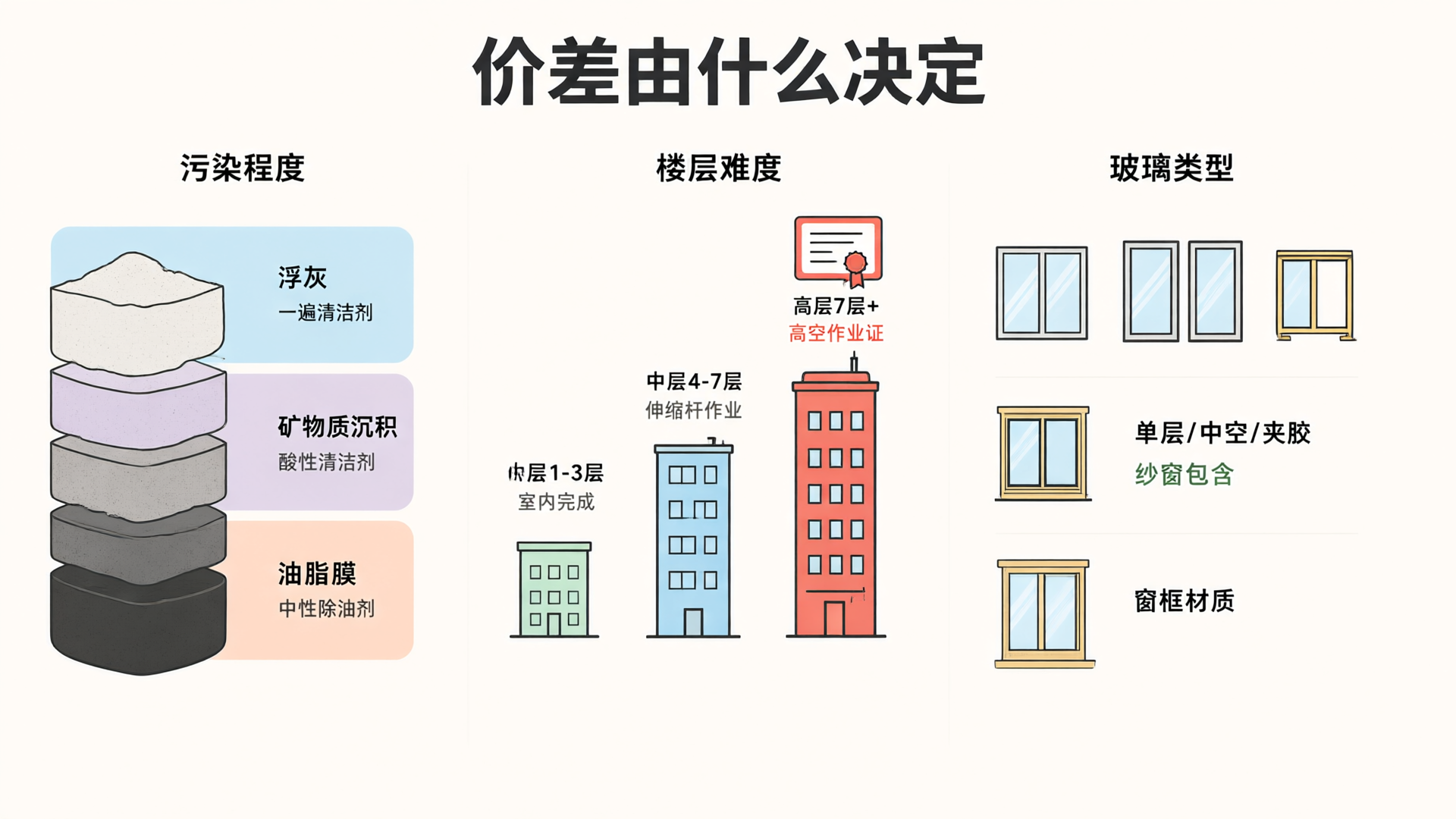
The first factor is the level of contamination. Glass surfaces left uncleaned for long periods develop layered grime: a top layer of loose dust, a middle layer of mineral deposits from rainwater, and an inner layer of grease film (from kitchen fumes or indoor cooking steam). The more layers present, the more complex the cleaning process becomes. Loose dust can be removed with a single application of cleaner; mineral deposits require an acidic cleaner paired with a soft squeegee; grease films need repeated treatment with a neutral degreaser. We categorize contamination into three tiers, each with corresponding labor hours and chemical usage, resulting in variable pricing.
The second factor is floor level and task difficulty. Low-rise floors (1–3) allow for dual-sided cleaning from indoors, ensuring high efficiency. For mid-to-high-rise floors (above 4), exterior glass requires extension poles or safety ropes, increasing time by approximately 30%–50%. For buildings exceeding 7 stories where exterior glass cannot be reached from inside, certified professionals with specialized equipment are required; this cost is reflected in the unit price. Among our 26 registered cleaners, 8 hold高空作业 certification to meet these needs.
The third factor is glass type and accessories. Cleaning difficulty varies between single-pane, double-glazed, and laminated glass. Additionally, whether screen windows are included and the window frame material (aluminum alloy, PVC, or wood) affect tool selection. We include screen window cleaning in our service at no extra cost; however, the impact of frame materials on tool choice will be discussed during the on-site survey.
Common Quotation Traps and Key Avoidance Tips
Pricing disputes over glass cleaning account for a significant portion of industry complaints, often stemming from opaque billing methods. Here are key points consumers should verify before comparing quotes and signing contracts.
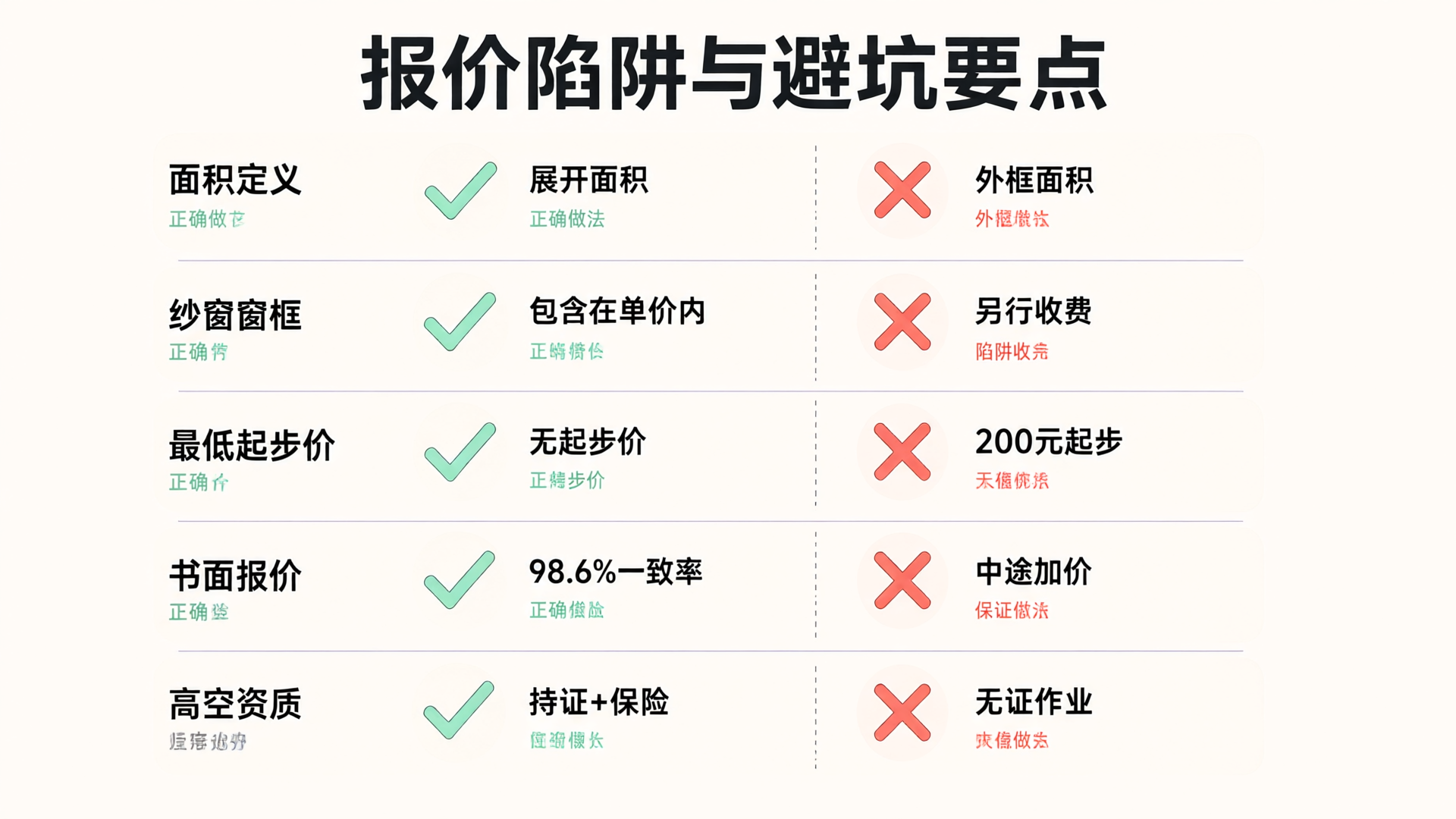
First, clarify the definition of "area." Some sellers quote seemingly low unit prices (e.g., 3-4 CNY/m²), but calculate area based on the outer frame dimensions of the window. This includes the window frame, embedded wall sections, and even sill areas. The actual exposed area may be only 60%–70% of the quoted area, resulting in a higher effective unit price. Before signing, require the seller to explicitly state the area calculation method to avoid disputes.
Second, confirm whether window screens and frames are included. Some quotes cover only the glass; screen and frame cleaning may incur additional charges. Our service includes screen cleaning in the unit price, while frame cleaning follows the standard for "Glass Window Frames" item 3 in the acceptance checklist 12, with no separate fees applied.
Third, check for "minimum starting price" or "minimum area requirements." Some providers set a starting price of 200 yuan or a minimum area of 30㎡. For homes with small total glass areas (e.g., one-bedroom apartments, typically 15-25㎡ of expanded glass surface), the effective unit price can be significantly inflated.
Fourth, clarify the relationship between the written quote and final settlement. The standard process is to provide a written quote after on-site inspection; once the customer signs off, the final settlement follows that quote with no mid-process price increases. Our written quotes matched the final settlements in 2025 years at a rate of 98.6%, with the remaining 1.4% deviation attributed to customers requesting additional cleaning areas during the service.
Fifth, verify qualifications and insurance for high-altitude work. For high-rise residential projects involving exterior window cleaning, ensure cleaners hold valid high-altitude work certifications and have appropriate accident insurance. Operating without proper certification can lead to complex liability issues in the event of a fall.
Acceptance Criteria and After-Sales Support
The acceptance criteria for glass cleaning directly impact whether customers feel they got their money's worth. Of the 12 items on our acceptance checklist, the glass and window frame section includes 3 core metrics: glass surfaces must be free of water marks, fingerprints, and residue; window tracks must be free of dust and grit; and screen meshes must be undamaged with proper light transmission. During inspection, view both straight-on and from the side from inside the room. Under side lighting, no visible film-like residue means it passes.
This acceptance standard transforms the subjective notion of "clean" into quantifiable inspection criteria. Consumers can check each item against the checklist during acceptance rather than relying on a gut feeling about whether it's been wiped clean. Between 2024 and 2025, we had 68 orders requiring rework, accounting for 1.8% of total orders. Rework was completed within an average of 36 hours at no extra cost. Within 7 days after acceptance, any non-compliant areas in the same region qualify for free on-site rework.
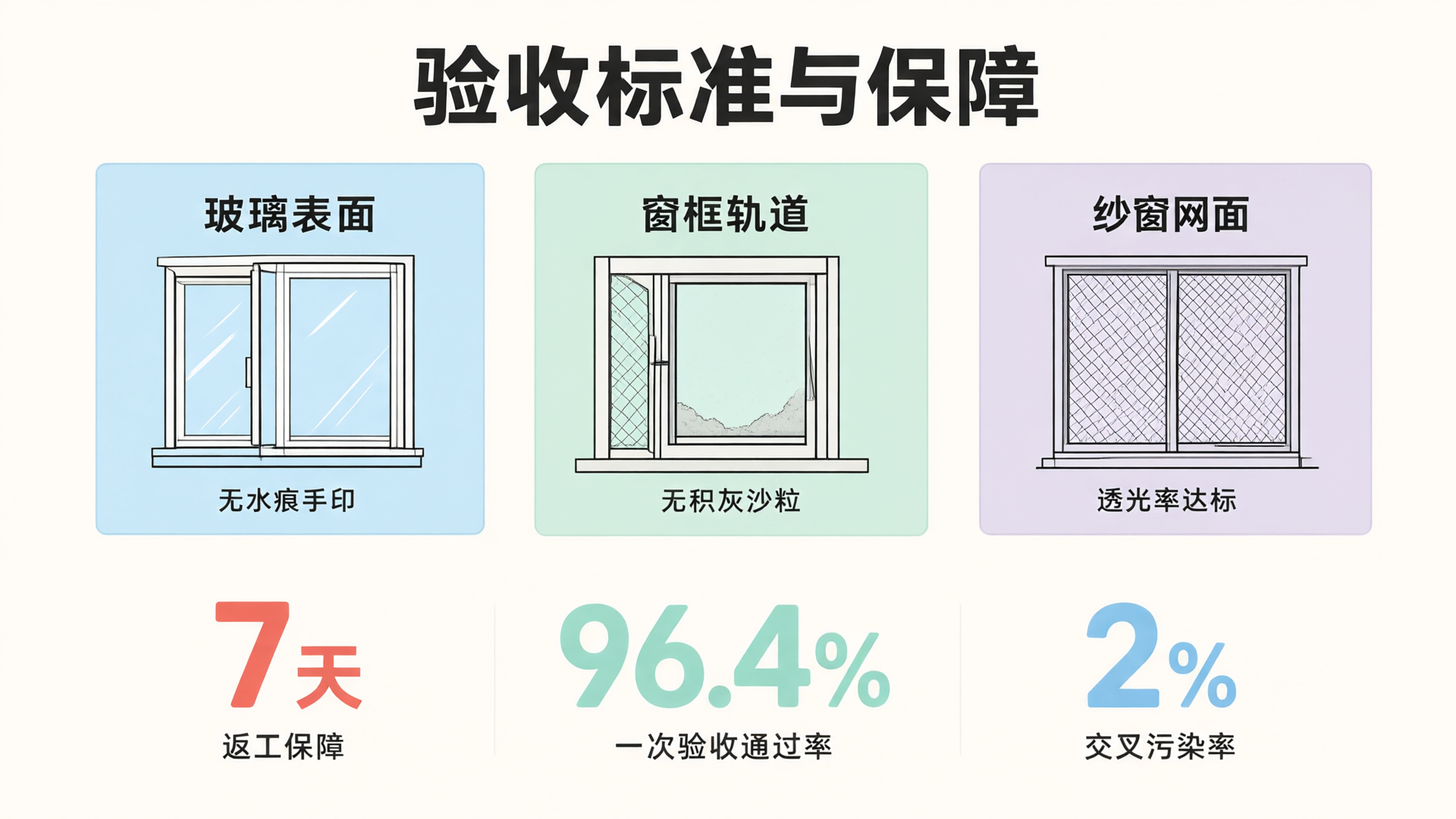
Another key metric is the first-time pass rate. After implementing the four-color zoning system (red tools for bathrooms, yellow for kitchens, blue for living areas, and green for glass), cross-contamination dropped to 2%, while the first-time pass rate improved to 96.4%. Using dedicated green tools in glass areas prevents secondary contamination from kitchen grease residues.
Practical tips for scheduling appointments in autumn
For homeowners planning to clean their windows in the fall, keep these key timing tips and operational details in mind.
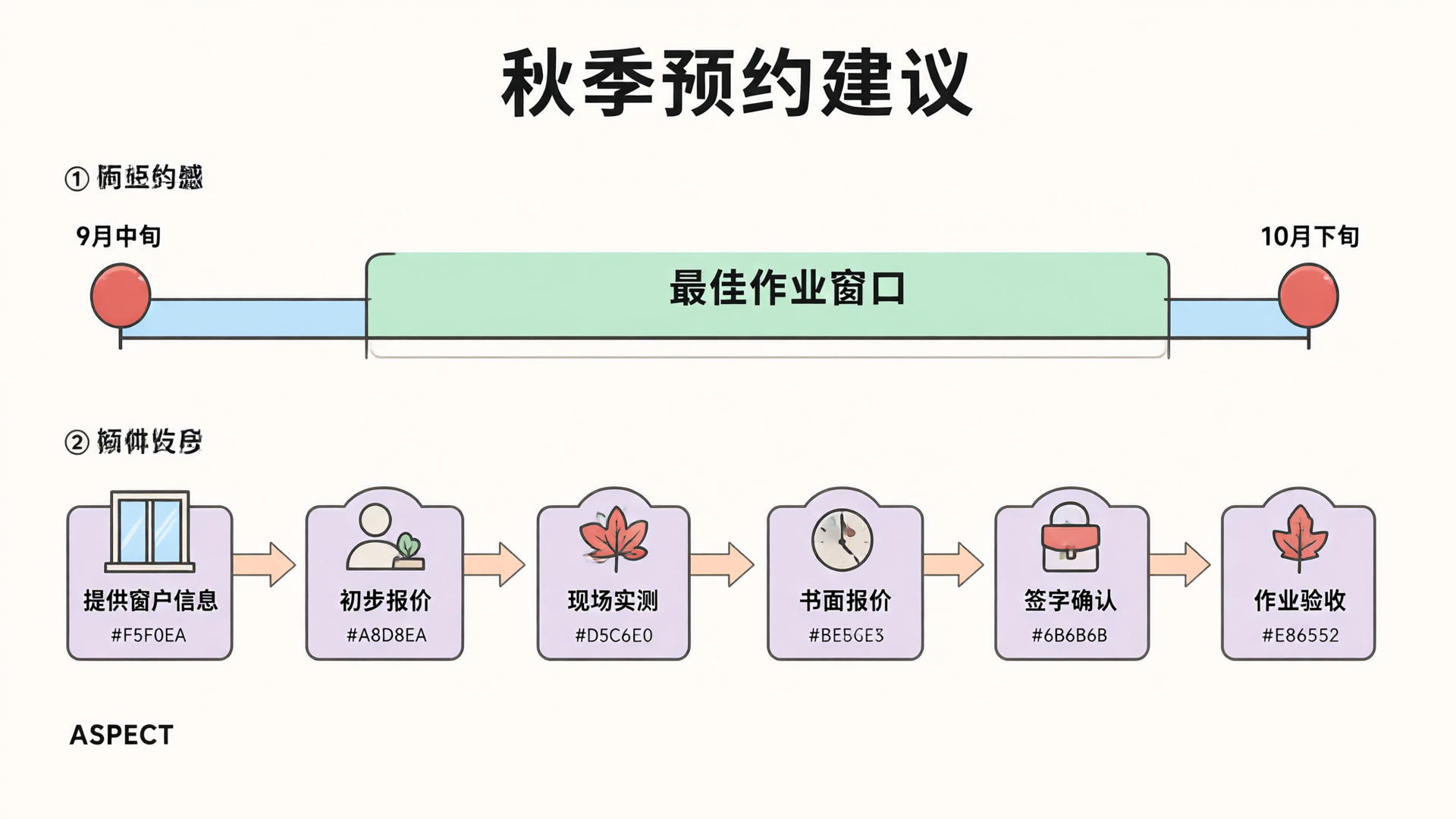
The period from mid-9 to late-10 offers the optimal operating window. At this time, temperatures are moderate, the rainy season has largely ended, and dirt on the glass surfaces has accumulated sufficiently but has not yet hardened into stubborn deposits. Starting in 11, temperatures in northern regions drop, causing cleaning agents to dry more slowly and reducing overall efficiency.
Providing the accurate number of windows and approximate area during booking helps our customer service team give you a preliminary price range. The final precise quote requires an on-site measurement, but early communication reduces information gaps. We promise to call back within 2 hours after your appointment to confirm the area and time. For commercial and engineering projects, we offer free on-site measurements and written quotes.
We recommend that consumers be present during the acceptance phase to inspect each item on the checklist. If any issues are found, report them immediately so the cleaner can address them on the spot. Settlement occurs only after signing off, ensuring a transparent and fully controllable process.
The 6-10 CNY/sq.m price range for fall window cleaning reflects a comprehensive assessment of pollution levels, operational complexity, and service standards. When comparing quotes, consumers should focus not just on the unit price, but on whether the pricing methodology is transparent, acceptance criteria are clearly defined, and after-sales guarantees are enforceable. Confirming these three points before signing can help avoid most pricing traps.
Key Data
- Over 70% of our glass cleaning inquiries during this period ask the same question: What's the difference between prices in the 6-10 yuan/sq.m range?
- A standard 1.5m × 1.2m casement window has a single glass panel area of approximately 1.6-1.7 m² (excluding the frame reveal).
- If this window has double-glazed insulating glass, both the inner and outer surfaces need cleaning. The expanded area is calculated as 2 times the original, resulting in 3.2-3.4 m².
- Glass cleaning prices for different households in the same complex and building can range from 6 to 10 yuan.
About the Author
Lin Yu Service Standards Supervisor
- Senior Indoor Cleaning and Maintenance Specialist
- Pre-employment Training Instructor with 400+ hours of teaching experience
- Manage skill assessments for 26 cleaners
Responsible for cleaning workflows, detergent selection, and acceptance criteria for both residential and commercial services. Data sourced from our internal operations manual.
Data Definition:Price range and labor hours on this page are based on actual settlement records from YuanYou Cleaning during the same period, calculated by building area or actual hours worked. Excludes holiday surcharges and transportation fees exceeding 30 km. Final quote subject to written estimate after on-site inspection.Statistics Interval2024 to 12, 1-2025, samples from26Actual work records of registered cleaning staff.