Factory Deep Cleaning Quote Starting at 1.2: Area-Based Pricing and Junk Removal Traps
2000㎡ factory initial cleaning quote: 1.2 million CNY, but final settlement often falls between 1.2 and 2 million. This article breaks down the underlying logic and cost structure of engineering cleaning priced by area, analyzes structural causes for overruns in waste removal fees, and clarifies the ambiguities among three pricing models. It also provides key steps to lock in quotes before signing.
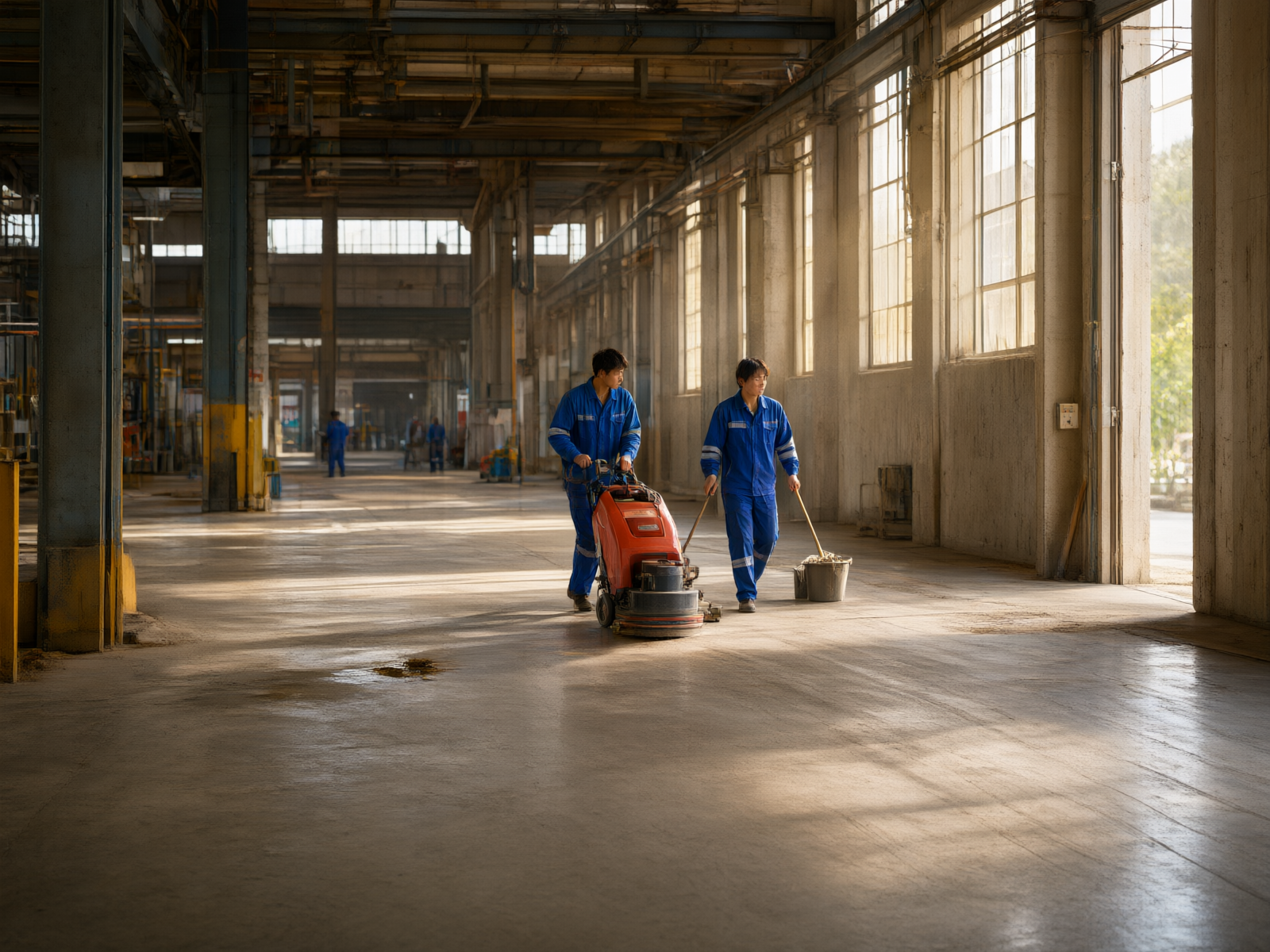
A 2000㎡ factory deep clean takes 2 days and is quoted at ¥1.2. Yet final bills often land between ¥1.2 and ¥2, a swing of up to 67%. Where does the gap come from? It lies in the "per-square-meter" pricing model and the flexibility of separate waste disposal fees.
This case study uses a 2000 sqm factory initial cleaning as a sample to break down the engineering cleaning pricing model and analyze the structural reasons for cost deviations in waste removal.
Why is commercial cleaning priced by area?
Area-based pricing is the industry standard for commercial cleaning, as it provides a quantifiable reference point for both parties. Clients can use it to estimate budgets, while service providers can allocate labor and materials accordingly.
For a 2000㎡ factory cleaning project, the base unit price typically ranges from 6 to 10 per square meter. This price variation is determined by three factors: contamination level, working height, and waste removal scope.
Pollution level is the primary pricing factor. Initial cleaning for a new facility differs significantly from major renovation after five years of operation. The latter involves multiple layers of contamination, including oil penetration, weld slag adhesion, and dust accumulation, resulting in a unit price increase of 2 to 3 CNY/m².
Job height impacts equipment and staffing needs. Routine ground cleaning is performed below 3 meters. Tasks involving overhead beams, high-level piping, or high windows require certified aerial work personnel and the use of suspended platforms or lift equipment; these costs are reflected in the quote as an additional fee.
The scope of waste removal is the variable with the greatest impact on pricing. The base unit rate typically covers only the cleaning labor itself; whether waste disposal is included and how the volume is measured directly determines the final settlement total.
Cost breakdown for the 1.2k quote
2000㎡ factory deep cleaning, 2-day timeline, quote: 1.2 ten thousand yuan. Based on the base rate of 6 yuan/㎡, this cost covers direct cleaning expenses only.
Labor costs: Cleaning a 2000㎡ factory within 2 days, based on an efficiency of 200 to 250㎡ per person per day, requires 4 to 5 cleaners working simultaneously. With daily wages for certified cleaners in East China ranging from 280 to 350 yuan, the labor cost for 4 workers over 2 days is approximately 2240 to 2800 yuan.
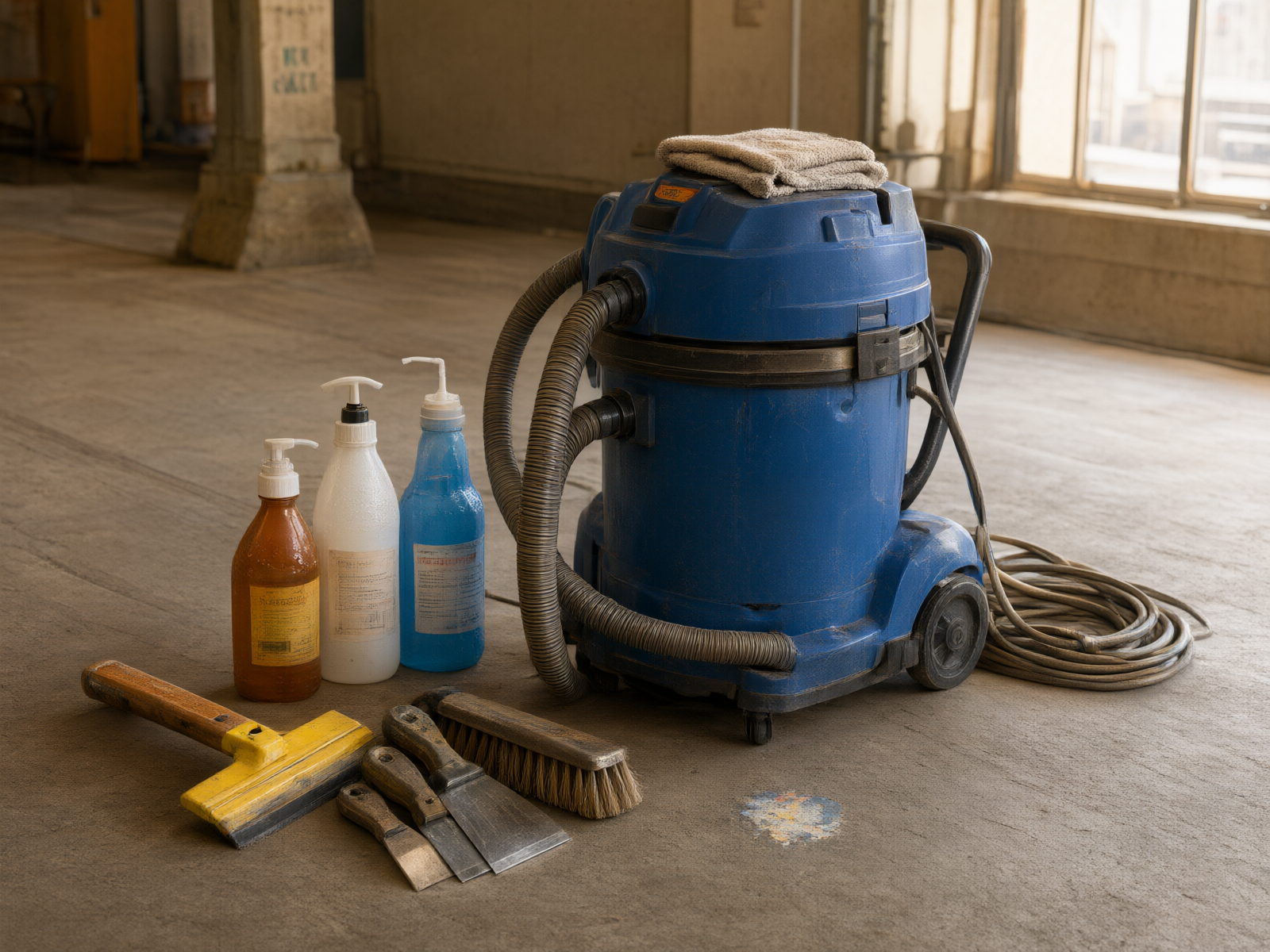
Material and equipment costs include wear and tear on industrial vacuum cleaners, floor scrubbers, aerial work platforms, neutral detergents, and scrapers. For a 2000㎡ area, material consumption and equipment depreciation amount to approximately 800–1200 CNY.
Project management costs cover site surveys, construction planning, quality acceptance, and after-sales support. This portion is typically calculated as 15% to 20% of direct costs.
Summing these three items, the direct cost for basic cleaning ranges from 3500 to 4500 yuan. After adding management fees, corporate profit, and taxes, a quote of 1.2 million yuan represents a reasonable profit margin for basic cleaning services.
Please note that this quotation model assumes a cleaning unit price of 6 yuan/㎡, excluding waste removal. Once waste removal is included in the settlement, the cost structure changes significantly. In our actual settlements from 2024 to 2025, the total cost for the initial deep-cleaning project of a 2000㎡ factory ranged from 1.2 to 2 million yuan, with waste removal accounting for typically 20% to 40% of the total.
Why do garbage removal projects often exceed budgets?
The garbage removal cost deviates from expectations, primarily due to uncertainty in the volume.
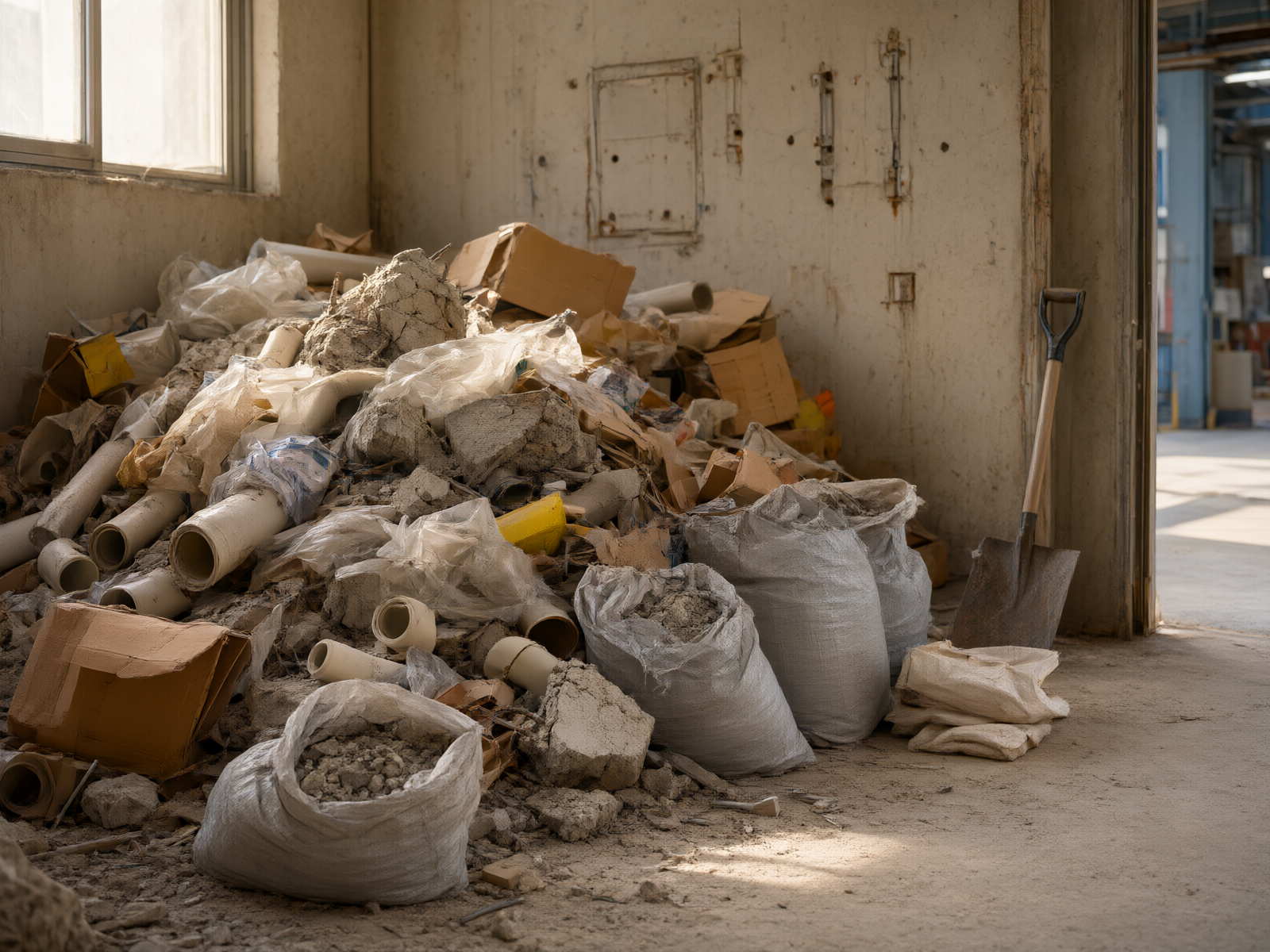
Engineering cleaning sites feature complex waste types, including construction debris (concrete chunks, paint residue, tile fragments), packaging waste (cardboard boxes, plastic films, wooden pallets), and production byproducts (oil-contaminated drums, discarded parts). Waste volumes can only be roughly estimated during the quoting phase; actual removal often exceeds expectations. For a 2000 sqm factory renovation, construction debris may range from 5 to 15 tons, causing disposal costs to vary between 1500 and 6000 yuan.
Waste type affects disposal costs. Construction waste and municipal solid waste have different unit rates. Hazardous waste (e.g., oil-contaminated drums, chemical solvent residues) must be handled by licensed facilities at a higher cost. If waste classification standards are not clearly defined during the quotation phase, disputes may arise during settlement.
Transportation conditions also introduce variables. Factors such as the distance between waste disposal sites and collection vehicles, floor height, and the need for secondary handling may not have been fully considered during the initial quote.
We encountered a case where the base quote for a factory startup project was 1.2 thousand yuan, but the final waste removal cost reached 5800 yuan—nearly one-third of the total. Upon review, the client found that the line item "waste removal billed separately" lacked both a defined measurement method and a cost cap. This lack of transparency in the fee structure is precisely why waste removal often becomes a hidden cost trap.
Three Pricing Models for Waste Removal and Their Gray Areas
Currently, the market primarily uses three pricing models for waste removal. Each model has its merits but also contains areas of ambiguity.
Charging per vehicle is the most common method. A rate of 300 to 800 per vehicle sounds clear, but the definition of "one vehicle" is flexible. A standard three-wheeler carries about 2 tons, while a 4.2-meter box truck can haul up to 8 tons. Even with the same "per vehicle" label, actual capacity can vary by fourfold. If a provider quotes based on smaller vehicles but charges for larger ones, costs can skyrocket.
Charging by tonnage appears transparent, but control over the weighing process is critical. If the hauler manages transport and selects the weighbridge, owners cannot easily verify weight accuracy. This is especially true for mixed waste, where fluctuations in moisture content cause significant volume differences even at the same tonnage.
The lump-sum pricing model sets the total waste removal cost upfront during the quoting phase. While this is most favorable for homeowners, service providers typically add a risk premium of 20% to 30% above their estimated volume to hedge against potential overages.
Each of the three approaches has its pros and cons, but they all share a common issue: information asymmetry. Waste haulers have far more visibility into waste volume, transport distance, and disposal costs than property owners. If key details aren't locked in during the quoting phase, you're likely to be at a disadvantage during settlement.
How to Stop Quote Traps Before Signing
Avoid engineering cleaning pricing traps by converting "verbal agreements" into "written commitments."
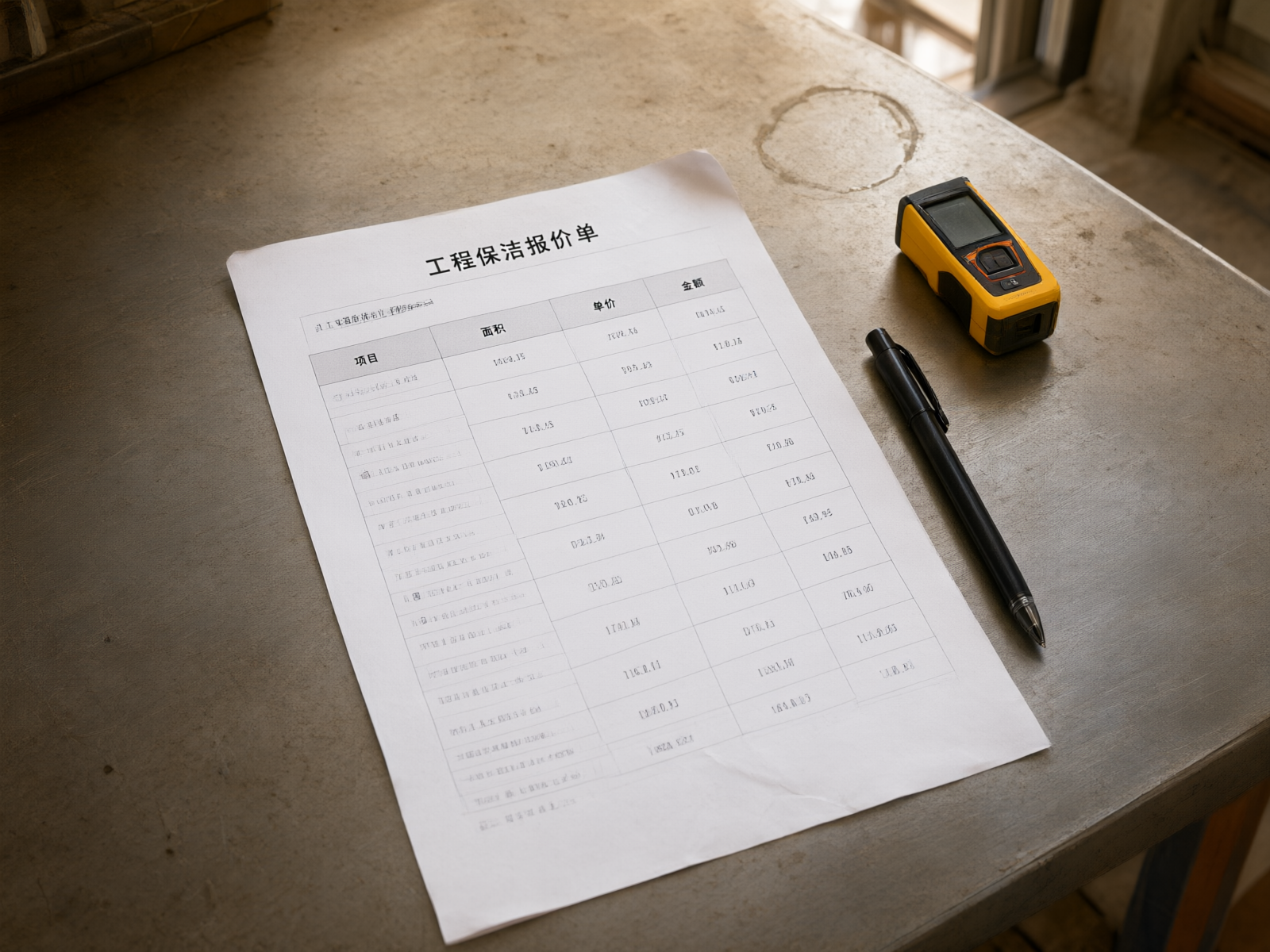
During the survey phase, bidders must submit a detailed estimate for waste removal, including waste types, estimated total volume, pricing method, and unit price. We use a three-stage quoting process: measured area (free laser measurement with error within 2%) → pollution grading → written quote. The written quote confirms waste type, estimated volume, and cost cap in text form. Final settlement achieves 98.6% alignment with the written quote.
During construction, if actual waste exceeds estimates, a change order approval process is required. All change orders must be confirmed in writing by the homeowner before execution. Any unconfirmed change order costs will be borne by the contractor.
During the acceptance phase, waste removal completion must be included in the acceptance checklist. Among the 12 items we verify, clearing on-site waste is a mandatory check—cleaning isn't just about wiping floors; it also means removing all trash from the premises.
For projects of 2000㎡ or larger, we offer a free on-site inspection during the quoting phase. We then lock in the cleaning area, pollution classification, waste removal details, and cost cap in writing. Project managers can review the breakdown and boundaries of every cost before signing.
Conclusion
Engineering cleaning cost estimation fundamentally relies on cross-verifying three dimensions: accuracy of area measurement, transparency of unit pricing, and capping of waste disposal fees. A 2000㎡ factory deep-cleaning quote of 1.2 million CNY falls within a reasonable range for basic cleaning services. When waste removal is included in the settlement, the total cost rising to 1.5–2 million CNY is also normal. The critical factor is whether this price range was clearly communicated and formally locked in writing prior to signing the contract.
Transparent pricing isn't about offering discounts; it's about reducing communication costs for both parties. Clearly defining the composition and boundaries of each fee in the contract is essential for a smooth engineering cleaning partnership.
Key Data
- 2000㎡ factory deep cleaning, 2-day timeline, quote: ¥1.2 million — a figure that doesn't stand out in the project manager's budget.
- However, when the final settlement statement is issued, actual costs typically range between 1.2 and 2 ten thousand yuan, with a fluctuation of up to 67%.
- This case study of a 2000㎡ factory initial cleaning breaks down the engineering cleaning pricing model and analyzes the structural causes behind unexpected deviations in waste removal costs.
- For a 2000㎡ factory initial cleaning, the base unit price typically ranges from 6 to 10 CNY/㎡.
About the Author
Lin Yu Service Standards Supervisor
- Senior Indoor Cleaning and Maintenance Specialist
- Pre-employment Training Instructor with 400+ hours of teaching experience
- Manage skill assessments for 26 cleaners
Responsible for cleaning workflows, detergent selection, and acceptance criteria for both residential and commercial services. Data sourced from our internal operations manual.
Data Definition:Price range and labor hours on this page are based on actual settlement records from YuanYou Cleaning during the same period, calculated by building area or actual hours worked. Excludes holiday surcharges and transportation fees exceeding 30 km. Final quote subject to written estimate after on-site inspection.Statistics Interval2024 to 12, 1-2025, samples from26Actual work records of registered cleaning staff.